

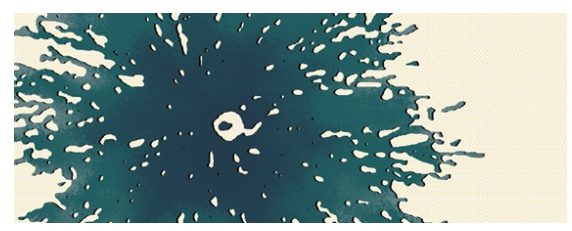
The first pattern, which the team has termed “wists,” describes a series of subtle, helical twists that ripple through the clay’s interior. Unlike the turbulent churning seen in most fluids, these wisps are orderly, rotational defects that appear to relieve internal stress without causing a full fracture. “Imagine wringing out a wet towel, but instead of the fabric tearing, the internal layers begin to spiral around each other in a perfect mathematical rhythm,” explained Dr. Elena Vance, lead author of the study. “We have never seen soft clay organize itself this way before.”
The second pattern is even more striking: the formation of “fingers.” As the clay flows under specific pressures, smooth sections of the material abruptly splinter into long, digit-like protrusions that push forward into slower-moving regions. These “viscous fingers” resemble the branching patterns seen when air is injected into honey, but with a critical difference—the clay simultaneously exhibits microscopic fractures along the edges of these fingers.
“The coexistence is what shocked us,” Dr. Vance said. “You typically either get a fluid fingering pattern or a brittle fracture. You do not expect to get both at the same time in a soft, wet clay. It’s like seeing water freeze and boil in the same pot.”
The discovery has immediate implications for industries ranging from ceramics to oil drilling, where predicting clay flow is critical. More urgently, geologists believe the “wist and finger” model could explain a long-standing mystery in landslide science: why some clay-rich slopes fail gradually, while others suddenly shatter and accelerate.
“Traditional models treat clay as either a liquid or a solid,” said Professor Mark Hanford, a geotechnical engineer not involved in the study. “This research shows it is a shape-shifter. Those ‘fingers’ could act as hidden lubrication channels, while ‘wists’ might store energy like a coiled spring. Both are recipes for unexpected collapse.”
The team now plans to introduce these patterns into computer models of landslide prediction. If successful, the eerie “wists and fingers” of flowing clay may soon help forecast ground failures months in advance. “Clay has been under our feet—and under our notice—for millennia,” added Dr. Vance. “Turns out, it has been hiding a secret language of fractures all along.”