

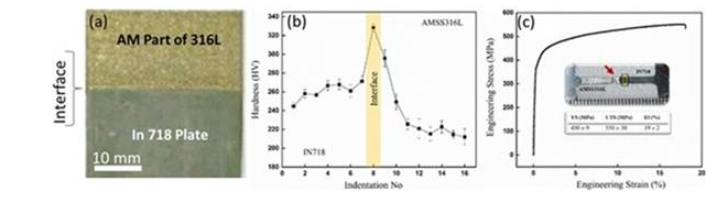
Indian researchers have achieved a major breakthrough in the fabrication of superalloy bi-metallic structures using advanced additive manufacturing (3D printing) technology, a development that could significantly reduce the country’s dependence on imported superalloys for strategic sectors such as aerospace, defence, space and energy.
The breakthrough enables the seamless joining of two different nickel-based superalloys into a single high-performance component using additive manufacturing. The technology combines the distinct properties of different superalloys in one structure, allowing components to perform efficiently under extreme temperatures, pressure and corrosive environments while reducing material wastage and manufacturing costs.
Developed by scientists with support from the Department of Science and Technology (DST), the innovation addresses one of the key challenges in additive manufacturing—producing defect-free bi-metallic structures with strong metallurgical bonding and superior mechanical properties. The technology is expected to enhance the reliability and service life of critical engineering components.
According to the researchers, the indigenous process will help reduce dependence on imported high-value superalloys and strengthen India’s capabilities in manufacturing advanced components for gas turbines, aircraft engines, rocket propulsion systems and power generation equipment. It also supports the country’s vision of self-reliance in advanced materials and manufacturing technologies.
The achievement marks a significant step towards developing next-generation manufacturing solutions in India and is expected to accelerate research, industrial adoption and commercialisation of advanced metal additive manufacturing technologies for strategic and high-end engineering applications.